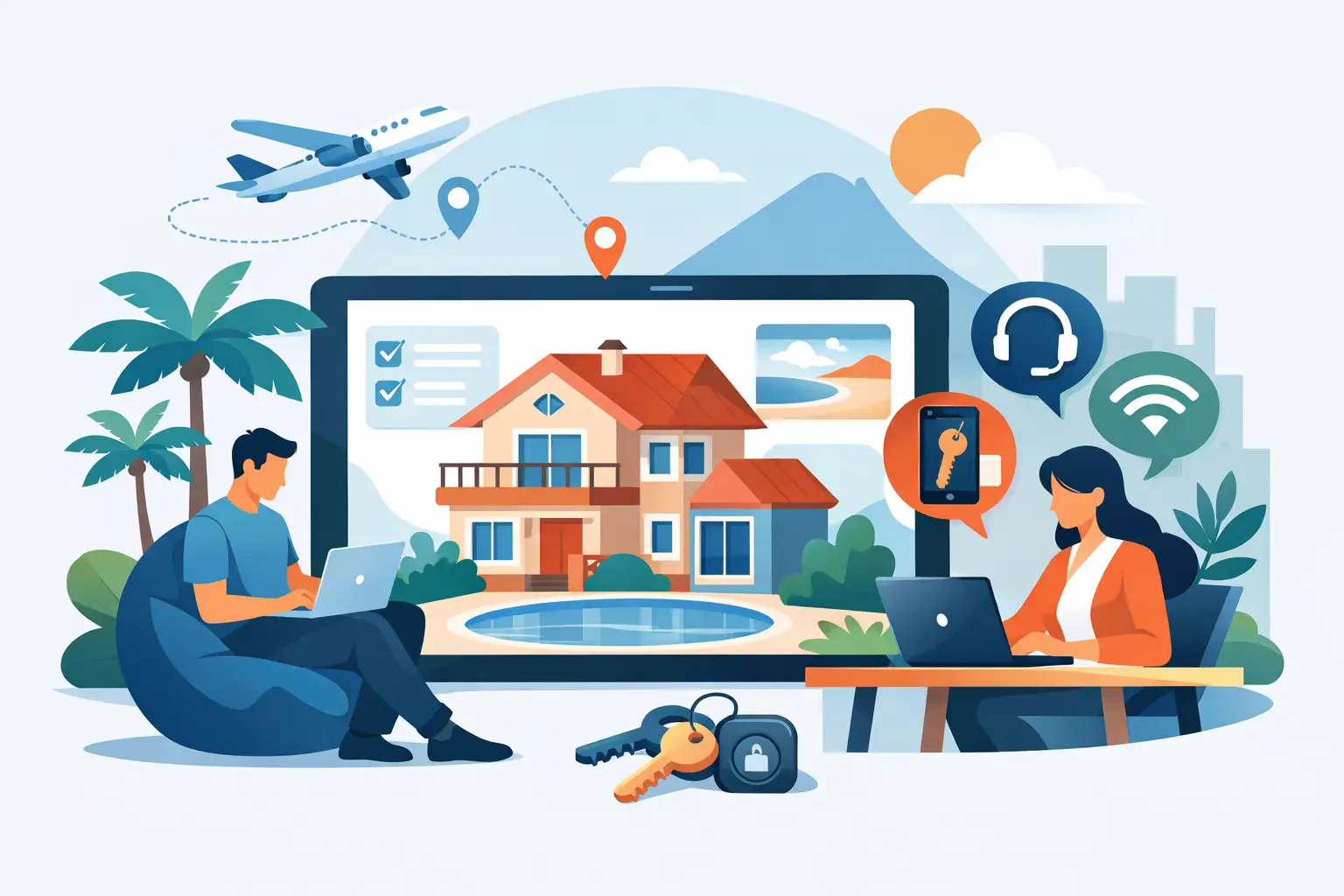
A missed cleaner, one unanswered guest message, or a minor repair handled too late can turn a profitable short-term rental into a constant liability. That is why owners asking how to manage Airbnb remotely are usually not looking for theory. They want a system that protects the property, keeps guests satisfied, and holds up when they are hours away.
Remote hosting can work very well, but only when operations are structured. The owners who struggle most are not necessarily inexperienced. They are often trying to coordinate too many moving parts from a distance – guest messaging, turnovers, supply restocking, maintenance, pricing, and vendor follow-up – without local control. If your property is in Lake Texoma or North Texas, that local control matters even more because weekend demand, seasonal swings, and vendor reliability can directly affect both reviews and revenue.
The key is to stop thinking like a casual host and start operating like a property manager. Remote Airbnb management is not just about having smart locks and automated messages. Those tools help, but they do not replace standards, accountability, and local execution.
A well-run remote property needs five things working together at all times: guest communication, turnover coordination, maintenance response, supply management, and revenue oversight. If one of those breaks down, the guest experience usually suffers first. Then the reviews decline. After that, occupancy and rate performance follow.
This is why remote owners need visibility into the operation, not just access to the booking calendar. You should know who is cleaning, how issues are being documented, when supplies are being checked, and how guest concerns are being resolved. Without that structure, remote management becomes reactive very quickly.
Many owners begin with the listing because it feels familiar. Photos, amenities, and pricing are important, but operations determine whether the listing performs over time. A strong listing can attract bookings. It cannot cover for a poor turnover, a plumbing issue left unresolved, or inconsistent communication.
Start by mapping every step that happens between checkout and the next arrival. Who confirms departure? Who inspects the home? Who handles linens, trash, consumables, and damage reporting? Who decides whether a maintenance issue is urgent or can wait? If you do not have clear answers, the property is not truly ready for remote management.
This is where many absentee owners run into trouble. They may have a cleaner, a handyman, and a lock system, but they do not have an operating framework. Individual vendors are not the same thing as coordinated oversight. Remote success depends on process discipline.
If there is one place remote Airbnb management either succeeds or fails, it is cleaning. Turnover quality affects guest reviews, damage detection, inventory awareness, and readiness for the next booking. A cleaner is not just resetting the home. They are also the eyes on the property.
That is why a short-term rental cleaning process needs standards, checklists, photo verification where appropriate, and consistency across every turnover. Generic residential cleaning is usually not enough. Vacation rental guests notice details quickly, and a missed reset item can lead to complaints even when the home is otherwise in good condition.
For remote owners, the real question is not whether someone cleaned. It is whether the property was inspected, staged correctly, and confirmed guest-ready. There is a difference.
Guests do not measure management quality by how hard you are trying. They measure it by response time, clarity, and resolution. If you are managing from another city or state, communication delays become more expensive because you cannot easily step in on site.
Set up structured messaging for booking confirmations, check-in instructions, house rules, mid-stay support, and checkout guidance. Then build a process for exceptions. Guests will still ask questions that fall outside templates. They will lock themselves out, report appliance issues, or request early check-in. Those moments require judgment and local coordination.
Fast communication protects reviews, but it also protects the asset. If a guest reports a leak and no one responds quickly, the problem is no longer a guest-service issue. It becomes a property issue.
Owners often assume vendor coordination is simple until something happens on a Friday afternoon before a weekend arrival. A cleaner cancels. The HVAC is not cooling. A previous guest leaves unexpected damage. At that point, your remote management plan is only as good as your local network.
You need vetted service providers who can respond reliably and a defined process for dispatch, approval, documentation, and follow-up. Not every issue needs the same response. Some repairs are urgent because they affect habitability or safety. Others can be bundled into routine maintenance. Good remote management depends on knowing the difference and acting accordingly.
In a market like Lake Texoma, where many bookings are tied to weekends, holidays, and seasonal travel, delays carry more cost. A problem that sits for 48 hours can mean a canceled stay, a refund request, or a poor review that affects future revenue.
Remote management is not only about preventing problems. It should also improve financial performance. Too many owners focus on occupancy alone and miss the larger picture. A booked calendar does not automatically mean the property is producing well.
Pricing should reflect seasonality, local demand patterns, booking lead time, holidays, and competitive inventory. If rates are static, revenue leakage is likely. If rates are pushed too high without matching property quality and guest expectations, occupancy can drop. The right approach is disciplined and market-aware.
Listing optimization matters here too. Accurate descriptions, strong photos, amenity positioning, and review management all influence conversion. But again, these work best when backed by operational consistency. Better pricing strategies cannot compensate for repeated service failures.
Owners managing remotely often think they need to choose between total control and total outsourcing. In practice, the better model is structured visibility. You should not need to answer every guest message or schedule every cleaner yourself. You should be able to see that the operation is being handled properly.
That means regular reporting, clear financial records, documented maintenance activity, and confidence that standards are being followed without your daily involvement. Good remote management reduces owner workload while increasing accountability. If it only reduces involvement but also reduces oversight, the system is incomplete.
This is one reason local full-service coordination is often more effective than piecing together separate contractors. A single accountable operator can connect guest communication, turnovers, property checks, supply monitoring, maintenance response, and listing performance into one managed system.
Some owners can self-manage remotely, especially if the property has low booking volume, a stable vendor team, and a straightforward layout with limited maintenance risk. If you are organized, highly responsive, and already have trusted local support, self-management may remain workable.
But there is a threshold where the model starts to break down. More bookings mean more turnovers, more guest communication, more wear on the home, and more chances for something to be missed. The same is true if the property is a second home you also want protected for personal use. In those cases, short-term rental management is not just about hospitality. It is also about asset care.
The trade-off is simple. Self-managing may save management fees on paper, but weak oversight can cost far more through revenue loss, emergency repairs, refunds, inconsistent cleaning, and preventable wear. For many absentee owners, the real value of local management is not convenience alone. It is control, preservation, and performance.
For owners in this region, a company like Texoma Host Solutions fits that need because the work is handled locally, with structured coordination and hospitality-grade cleaning support rather than distant listing-only management.
Remote Airbnb success is rarely about doing more from afar. It is about building a local system that works without guesswork, protects the property, and gives you confidence that standards are being met every day. If your current setup depends on constant follow-up, it is not truly remote-ready yet. The right structure should let your property perform well even when you are nowhere near it.




 (903) 933-6100
 info@texomahostsolutions.com