
A Lake Texoma guest may book for a fishing weekend, a family reunion, or a quiet escape from Dallas. They will still judge the property within seconds of opening the door. A clean, intentional space signals that the home is cared for. That confidence affects reviews, repeat bookings, and the condition of the asset over time. Learning how to stage vacation rentals is not about filling rooms with decorative items. It is about creating a guest-ready property that photographs well, functions reliably, and is simple for a local team to maintain between stays.
For owners managing from outside North Texas, staging also needs to support operations. A beautiful room that requires delicate handling, specialty replacements, or constant resets can create unnecessary turnover costs and inconsistency. The best staging plan combines hospitality standards with durable materials, clear placement, and practical inventory control.
Start with the guest experience you are selling, not a personal design preference. A lake house should feel relaxed and capable of handling wet towels, coolers, and groups returning from the water. A downtown or suburban North Texas home may need a more polished workspace, easy parking guidance, and family-friendly flexibility. The property does not need a theme in every room. It needs a consistent purpose.
Before purchasing anything, walk through the home as a guest would. Enter through the primary access point, set down bags, look for lighting, and picture preparing coffee the next morning. Identify friction points: a dark entry, nowhere to place luggage, inadequate bedside outlets, a sparse living room, or a kitchen with no clear prep space. Addressing those gaps usually creates more booking value than adding another piece of wall art.
Staging should reinforce the listing promise. If the listing markets a home for six guests, the common areas must comfortably seat six guests. If it promotes remote work, provide a genuine work surface, supportive chair, accessible outlet, and dependable lighting. If the outdoor space is a feature, make it ready to use instead of treating it as an afterthought.
Use a restrained palette that works with the home rather than competing with it. Neutral walls, coordinated bedding, wood tones, and a few regional or natural accents tend to photograph well and remain relevant longer than highly specific trends. This does not mean the property should feel generic. One or two strong visual elements, such as an oversized lake photograph, a well-made area rug, or a distinctive dining light, give guests something memorable without making replacements difficult.
Durability should guide every major selection. Choose washable slipcovers or performance-fabric seating, commercial-grade rugs where traffic is heavy, blackout window treatments in bedrooms, and nightstands with drawers or shelves. Avoid fragile glass furniture, white upholstered dining chairs, overly small side tables, and decor that can easily be moved or broken.
A good rule is to stage for use, then style the result. A living room needs enough seating, surfaces for drinks, and lighting for evening conversation before it needs pillows. A bedroom needs comfortable sleep conditions before it needs decorative layers. Guests remember whether the home worked for their group far more than they remember a styled shelf.
The entry should immediately communicate order. Provide a durable mat, a place for keys or bags, and simple arrival information displayed neatly. In lake-area properties, hooks for towels or outerwear can be more valuable than decorative furniture that narrows the walkway.
In the living area, define the main gathering zone around seating and a clear focal point. Avoid blocking pathways with oversized furniture. Add layered lighting so guests are not limited to a single overhead fixture, and provide charging access without a visible tangle of cords. A basket with a few current games or a locally relevant activity guide can add warmth, but keep it limited and easy to inventory.
Bedrooms deserve the same operational discipline. Use matching or coordinated bedding that can be replaced quickly. Supply quality mattresses, mattress protectors, pillow protectors, bedside lamps, and window coverings that support sleep. A bench, luggage rack, or clear closet space helps guests settle in without placing bags on beds or floors. Keep decorative pillows to a manageable number so the cleaning team is not spending unnecessary time sorting them at every turnover.
The kitchen is where staging often exposes weak operations. Guests need more than a few attractive mugs on an open shelf. Stock cookware, serving items, knives, utensils, coffee equipment, and dishware based on the advertised occupancy, with backup inventory stored and labeled. Leave counter space open. A clean coffee station and a small welcome setup can be effective, but crowded counters make the home look less functional in photos and create more cleaning work.
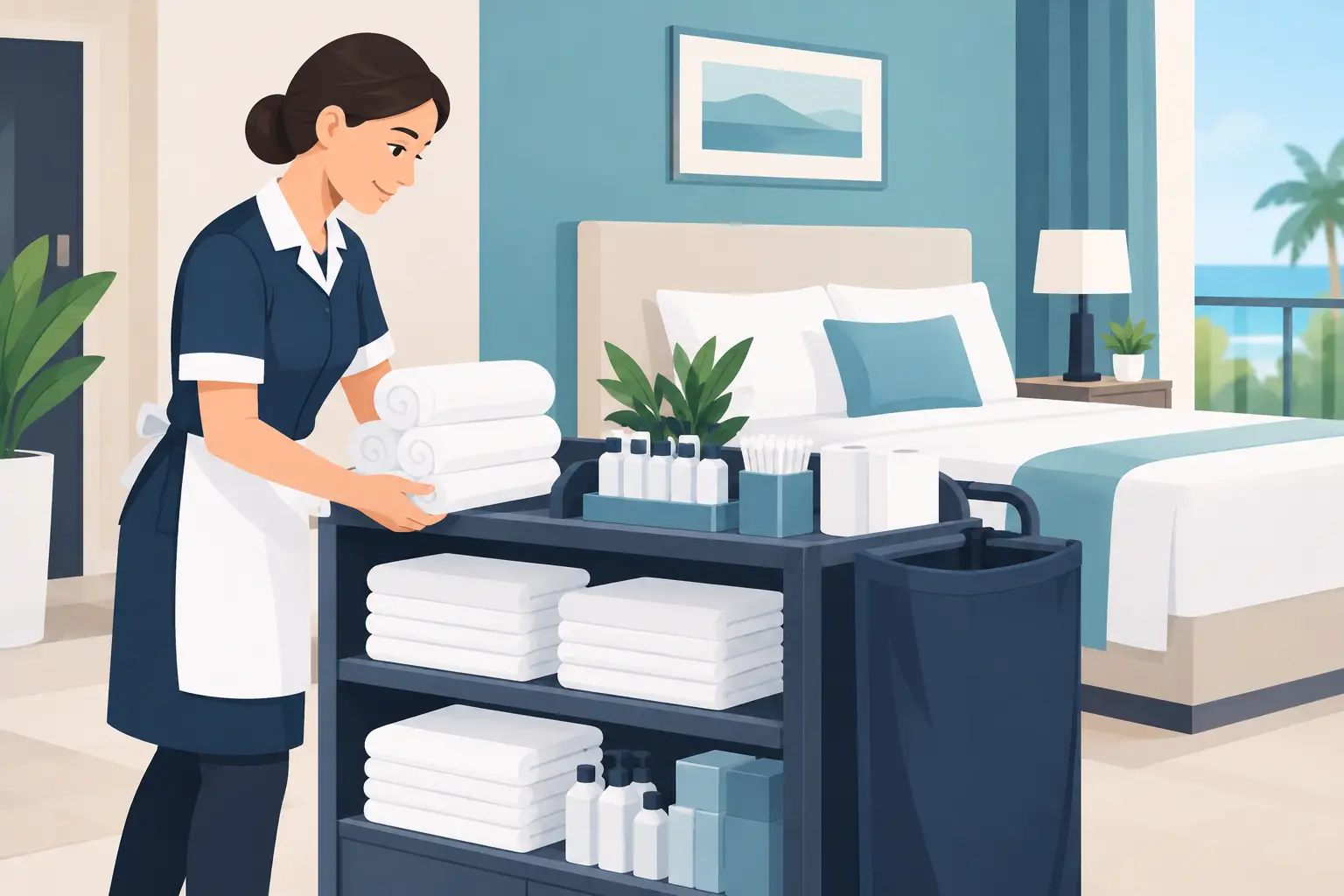
Bathrooms should feel simple, bright, and controlled. Provide clean, coordinated towels, secure hooks, quality soap dispensers, a hair dryer, and adequate storage for personal items. Use sealed containers and easy-to-wipe surfaces. Avoid excessive small decor, which collects dust and often goes missing.
Photography is a booking tool, but the home must match what guests see when they arrive. Stage each room for photos after all major furniture, lighting, and operational details are in place. Open blinds when the view is an asset, turn on lamps to remove dark corners, and show the real capacity of dining and seating areas.
Do not overstage with items that will disappear once the photos are complete. If a patio table is photographed with six place settings, it should be capable of serving six people. If the listing shows a reading nook, it should remain usable after turnovers. Misalignment between photos and the arrival experience damages trust quickly.
Outdoor areas deserve particular attention at Lake Texoma. Pressure-washed walkways, usable seating, clean grills, maintained fire features, and clear safety boundaries help the property stand apart. Outdoor furniture should be weather-resistant and secured or stored appropriately when conditions require it. A well-staged deck is valuable only if guests can safely and comfortably use it.
Amenities increase appeal, but each one adds responsibility. Stocking a property with too many loosely managed extras can lead to damage, missing inventory, and inconsistent turnovers. The better approach is to provide a smaller set of high-value amenities that are checked every time.
For many vacation rentals, that includes reliable Wi-Fi, smart TVs with simple instructions, a coffee setup, extra blankets, family games, outdoor seating, and basic kitchen equipment. Depending on the property and guest profile, a pack-and-play, high chair, fishing storage area, or dedicated workspace may justify the additional oversight. The decision should be based on target demand, not on trying to serve every possible traveler.
Create a placement standard for each amenity. Remote controls, hair dryers, grill tools, extra linens, and guest guides should have assigned locations. The cleaning or turnover team can then verify the setup efficiently instead of relying on memory. This protects the staged appearance and reduces the chance that a guest arrives to find an item missing.
Staging fails when it is treated as a one-time project. Vacation rentals experience frequent use, and every departure can affect furniture placement, linens, supply levels, and the overall condition of the home. A documented turnover checklist is what preserves the standard.
The checklist should cover more than cleaning. It should confirm that furniture is returned to its intended position, bedding is properly made, lamps and appliances function, outdoor areas are reset, consumables are replenished, and visible damage is reported immediately. Include reference photos for key spaces, especially living rooms, bedrooms, and patios. Photos give local teams a clear standard and give remote owners visibility into property condition.
Plan for replacement inventory from the beginning. Keep backup pillow covers, towels, sheet sets, shower liners, basic kitchen items, light bulbs, batteries, and commonly damaged decor on hand. Matching replacement pieces prevent a room from slowly becoming inconsistent after several busy weekends. It also avoids emergency shopping that costs more and delays readiness.
Seasonal adjustments matter in North Texas. Heavier throws and warmer lighting may suit cooler months, while lighter bedding accents, outdoor shade, and water-friendly storage can support summer demand. Make changes with intention and keep the core design stable. Constantly redesigning the property creates unnecessary expense without necessarily improving occupancy.
Owners can often handle initial design decisions remotely, especially when working from a clear plan. The challenge is keeping the staged standard intact once bookings begin. A missed inspection, a cleaner without a room-by-room reset process, or a delayed repair can quickly undermine the investment made in furnishings and photos.
Local management is particularly valuable when a home has frequent turnovers, extensive outdoor amenities, vendor needs, or owners who cannot make regular visits. Texoma Host Solutions coordinates hospitality-grade cleaning, supply monitoring, property oversight, and vendor response so the home is not simply listed, but maintained as a revenue-producing asset.
The most effective staging should feel effortless to guests because the operational work happens before they arrive. Set a standard that matches the property, document it clearly, and make sure someone local is accountable for protecting it after every stay.



 (903) 933-6100
 info@texomahostsolutions.com
