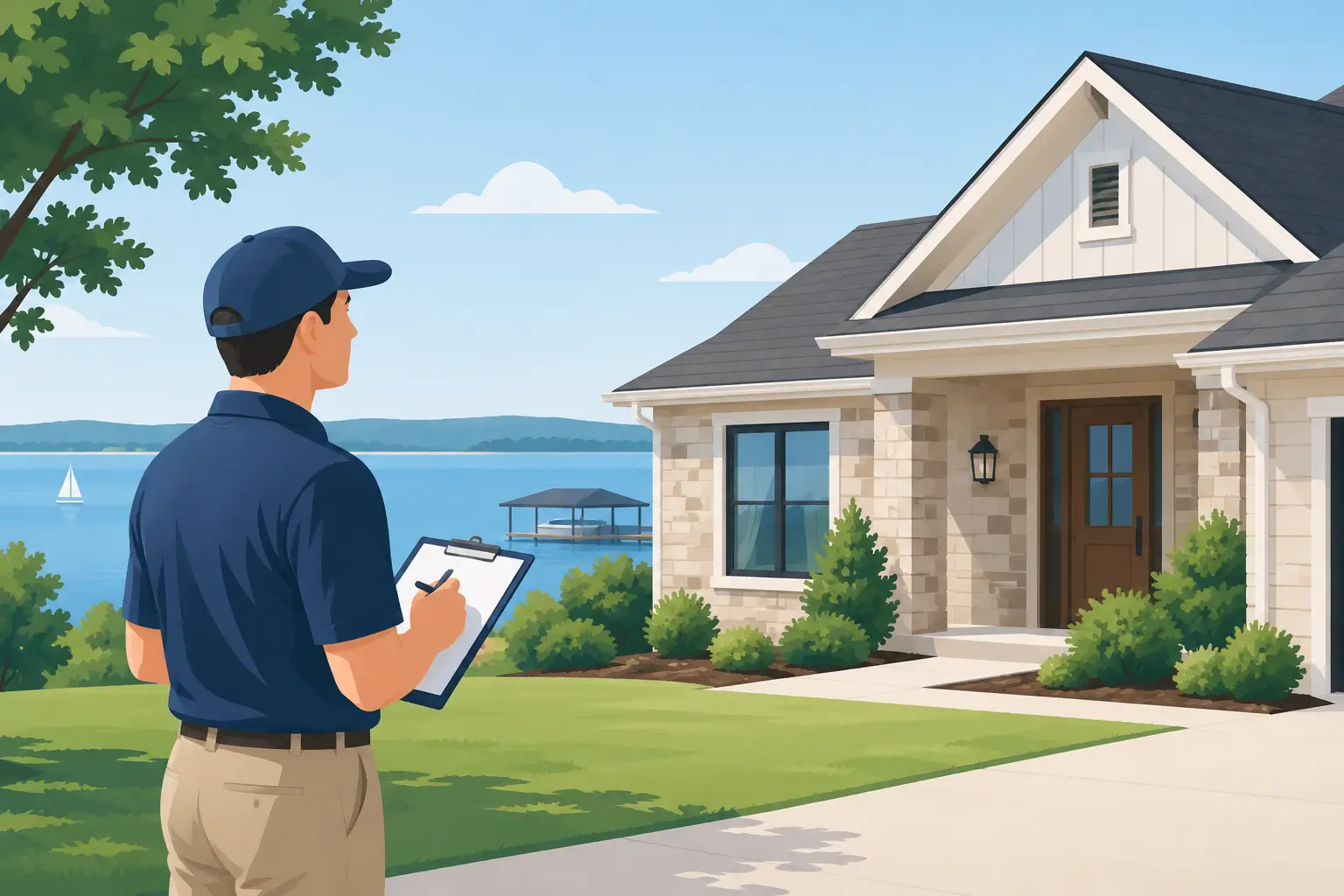
A guest checks out on Monday morning. Another arrives Friday afternoon. Between those two moments, a vacation rental can go from revenue-producing asset to avoidable problem if a leaking toilet, missing smoke detector battery, damaged dock light, or incomplete turnover goes unnoticed. Rental inspections create the control point that remote owners need: a documented, local review of property condition before small issues become expensive disruptions.
For Lake Texoma and North Texas owners, inspections are not an occasional walkthrough reserved for emergencies. They are a structured operating process that protects the home, supports guest readiness, and gives owners visibility without requiring them to drive hours to check on the property.
A useful inspection does more than confirm that the home looks clean. It verifies that the property is safe, functional, supplied, secure, and prepared for the next guest. The goal is to identify exceptions quickly, document them clearly, and assign the right response before they affect a stay or create further damage.
For an absentee owner, that process should answer practical questions: Is the HVAC performing as expected? Did the cleaning team complete the turnover to standard? Is there guest damage that needs documentation? Are exterior areas presentable and safe? Is a vendor needed, and if so, how urgent is the issue?
A strong inspection program also separates normal wear from a true operational concern. A scuffed baseboard may be noted for future touch-up. A loose deck rail, active water leak, or failed smoke alarm requires immediate action. Without that distinction, owners either receive too much noise or learn about meaningful problems too late.
There is no single schedule that fits every short-term rental. The right cadence depends on booking volume, property age, amenities, seasonality, and the level of guest use. A lake home with a boat slip, hot tub, multiple outdoor spaces, and frequent weekend stays needs more oversight than a lightly used condominium with limited amenities.
The most frequent review should occur after guest departure and before the next arrival. This inspection works alongside cleaning coordination, but it should not be treated as the same task. Cleaners are essential to hospitality-grade presentation. An inspection provides quality control and confirms that the home is operational, not simply tidy.
During a turnover review, the focus is on visible damage, missing inventory, appliance function, restroom condition, linens, supplies, access devices, lighting, and safety equipment. Exterior areas deserve the same attention, especially at Lake Texoma properties where weather, wildlife, lake traffic, and seasonal use can change conditions quickly.
If the schedule is tight, the inspection process must prioritize issues that could affect an arriving guest. A cosmetic concern can be scheduled. A broken lock, an uncooled home in July, or a nonfunctioning water heater cannot.
Between bookings, a more detailed inspection helps owners avoid deferred maintenance. This is where a local team checks items that may not be obvious during a fast turnover: caulking, plumbing shutoffs, roofline concerns, drainage, pest activity, foundation cracks, exterior paint, irrigation, and the condition of decks, stairs, railings, and outdoor furniture.
Seasonal reviews are particularly valuable in North Texas. Freezing temperatures can expose plumbing vulnerabilities. Spring storms can affect roofing, trees, fencing, and power systems. Summer heat places heavy demand on HVAC equipment, while periods of lower occupancy can allow unnoticed moisture or pest issues to develop.
A preventive inspection does not replace a licensed specialist when one is needed. It creates an early-warning system so the right vendor can be dispatched before an issue expands into an insurance claim, a canceled reservation, or a major repair.
Inspection standards should be consistent enough that results can be compared over time. That makes it easier to see repeat failures, identify maintenance trends, and hold vendors accountable for completed work.
Inside the home, the inspection should confirm that entry points lock properly; smoke and carbon monoxide detectors are present and functioning; HVAC settings and performance are appropriate; plumbing fixtures are free of active leaks; and major appliances operate as expected. It should also confirm the condition of furniture, electronics, linens, kitchenware, and high-use surfaces.
The exterior review should cover doors, windows, lighting, walkways, landscaping, trash areas, gates, fences, decks, and any guest amenities. For lake-area homes, docks, retaining walls, fire pits, grills, outdoor showers, and water-facing stairs may require additional attention based on the property setup and local conditions.
Documentation matters as much as the walkthrough itself. Photos, time-stamped notes, and a clear status report give the owner a reliable record. They also create a useful baseline when guest damage needs to be addressed or when a vendor confirms that work is complete.
Many owners think of inspections as a maintenance expense. In practice, they are often a revenue-protection process. A guest who arrives to a warm house, a dirty patio, insufficient towels, or a malfunctioning appliance may request a refund, leave a damaging review, or decide not to return. A single poor stay can affect more than one reservation.
Inspections also reduce the cost of delayed repairs. Water intrusion, for example, rarely stays small. A minor leak discovered during a turnover can be repaired quickly. The same leak left unchecked during a vacancy can damage flooring, cabinetry, drywall, and furnishings.
There is a balance to maintain. Over-inspecting every minor detail can create unnecessary vendor calls and cost. Under-inspecting exposes the property to preventable loss. The best approach uses defined checklists, trained local eyes, and escalation rules that match the severity of the issue.
Owners should not receive a vague message saying that something “needs attention.” They need enough information to make sound decisions without being pulled into every operational detail. A disciplined process identifies the problem, documents the condition, explains the likely impact, and recommends the next step.
For routine repairs, the manager can coordinate an approved vendor and keep the owner informed through completion. For larger expenses, safety concerns, or work outside established approval limits, the owner should receive a prompt update with photos, expected cost, and timing. This structure preserves owner control while avoiding delays caused by unclear communication.
It also helps to maintain a repair history. If the same dishwasher fails twice in one season or an HVAC unit repeatedly needs service, the owner has a clearer basis for deciding whether continued repairs still make financial sense.
Remote cameras and smart-home alerts are useful, but they do not replace a person who can inspect a home, verify a repair, or meet a vendor onsite. Technology can indicate that a door opened or indoor temperature changed. It cannot confirm whether a storm damaged the roof, whether the cleaner missed a stained comforter, or whether a contractor actually resolved the issue.
That is where a local operating team provides practical value. Texoma Host Solutions coordinates property oversight with hospitality-grade cleaning support and vetted local vendors, so inspections lead to action rather than a list of problems left for the owner to solve.
For owners who live outside the market, this local accountability is often the difference between owning a rental and actively managing one from a distance. The property receives attention based on its real condition, not assumptions made from an app, a guest message, or a calendar gap.
The most effective time to improve rental inspections is before a full calendar, a holiday weekend, or a weather event exposes weak processes. Establish the inspection checklist, define approval thresholds, confirm vendor contacts, and decide how often the property needs deeper preventive reviews.
A well-managed vacation rental should not require constant owner intervention to stay protected. It should have a dependable local process that catches issues early, documents conditions accurately, and keeps the home ready for the next guest. That is the kind of oversight that preserves both the property and the income it is meant to produce.




 (903) 933-6100
 info@texomahostsolutions.com
