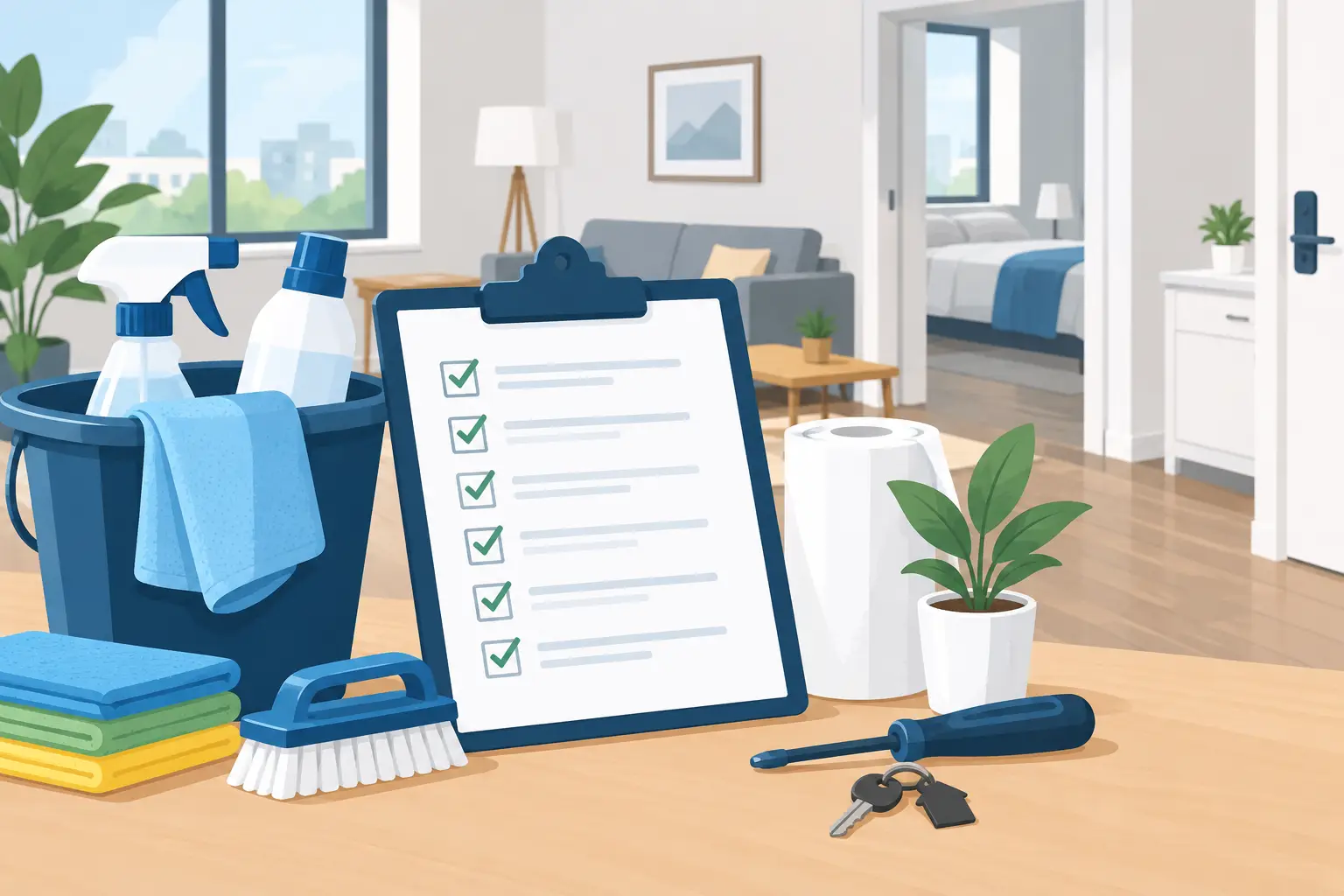
A guest checking in at 4:00 p.m. will not see the work behind a well-run property. They will notice the full coffee station, fresh towels, working remote controls, stocked soap dispensers, and clean outdoor seating. That is why essential supplies for rental turnovers are not a minor housekeeping detail. They are a direct control point for guest satisfaction, property protection, and booking performance.
For remote owners, supply management is especially easy to underestimate. A cleaner may complete an excellent reset, yet a missing trash liner, empty propane tank, or depleted battery can still create a guest issue. A structured supply system gives every turnover team a clear standard, reduces last-minute store runs, and keeps the property ready for the next reservation.
The right inventory depends on the property’s size, amenities, guest capacity, and average length of stay. A two-bedroom lake cabin does not need the same par levels as a large home with a hot tub, boat parking, and a full outdoor kitchen. Still, every short-term rental should have dependable supplies in a few core categories.
Guests expect basic household items to be present from the moment they arrive. These supplies should be consistent across every stay, not left to chance based on what the prior guest did or did not use.
A practical guest-consumable inventory includes:
The goal is not to overstock every cabinet. Excess inventory ties up capital, makes counting harder, and can expire or disappear. Instead, establish a standard quantity for each item based on the home’s sleeping capacity and turnover schedule. For example, a larger property may need backup paper goods stored in a locked owner closet, while a smaller condo may only need a compact, clearly labeled supply bin.
Hospitality-grade cleaning requires more than a general-purpose spray and a vacuum. Turnover teams need products that address kitchens, bathrooms, floors, bedding, high-touch surfaces, and odor control without damaging the property’s finishes.
Keep approved cleaning products on site and standardize them across the portfolio where possible. This improves training, avoids product substitutions, and makes it easier to spot when an item is running low. Include disinfectant, glass cleaner, degreaser, toilet bowl cleaner, floor-safe solution, stain treatment, microfiber cloths, scrub pads, gloves, mop heads, vacuum bags or filters, and a reliable odor-neutralizing product.
Product selection requires judgment. Strong chemicals may remove buildup quickly but can damage natural stone, wood finishes, or delicate fixtures. Fragranced products can help a space feel fresh, but heavy scents may bother sensitive guests or create the impression that an odor is being covered up. Use products suited to the home’s materials and maintain a clean, neutral standard.
Missing linens are one of the fastest ways for a turnover to fall behind. Each property needs enough towels, sheets, pillowcases, bath mats, kitchen towels, and blankets to complete a full reset even when laundry is delayed or an item is stained beyond immediate reuse.
A common operating standard is to maintain multiple complete linen sets per bed, plus an appropriate towel par for the maximum guest count. The exact amount depends on whether laundry is processed on site, taken off site, or handled through a linen service. Properties with same-day checkouts and check-ins need more backstock than homes with longer gaps between bookings.
Do not treat all linens as interchangeable. Standardize sheet sizes, towel colors, and replacement quality so the home looks intentional after every reset. Store clean linen in sealed, labeled containers or a dedicated locked closet. This protects the inventory from dust, moisture, and accidental guest use.
Turnovers are also the best time to catch small operational issues before they become arrival-day emergencies. The supply closet should support routine checks and basic corrections, not substitute for qualified maintenance work.
Keep replacement batteries for remotes, smart locks, smoke detectors, flashlights, and other battery-powered devices. Stock light bulbs that match the property’s fixtures, HVAC filters in the correct size, basic tools, felt pads, zip ties, and approved touch-up materials for minor cosmetic fixes. A labeled spare key or lockbox backup should be controlled under a documented access process.
Safety supplies deserve separate attention. First-aid kits, fire extinguishers, smoke and carbon monoxide detector batteries, pool or hot tub test materials, and emergency contact instructions should be inspected on a schedule. If a turnover team identifies a damaged handrail, tripped GFCI outlet, leaking toilet, or failed detector, that issue should be documented and routed immediately to the appropriate vendor.
The strongest turnover systems account for what makes each home different. A Lake Texoma property may need supplies for docks, patios, grills, fire pits, sandy entryways, or high-use outdoor areas. A pet-friendly home needs lint rollers, waste bags, pet-safe cleaning products, and a clear process for checking for damage. A property with a hot tub needs dedicated testing supplies, towels, signage, and vendor coordination protocols.
These items should not live only in someone’s memory. Build a property-specific supply list and turnover checklist for every home. Include brand names, sizes, storage locations, reorder thresholds, and any restrictions. If the owner prefers a particular coffee, scent-free product, premium towel line, or eco-conscious option, document it so the standard remains consistent even when staff changes.
Buying supplies is straightforward. Maintaining visibility over them across recurring reservations is the operational challenge. The most effective systems use defined storage, set par levels, and a clear replenishment process.
Start by separating guest-accessible supplies from operational backstock. Guests should have enough essentials for the stay without access to bulk inventory. Cleaning teams should be able to find approved replacement items quickly, but excess stock should remain secure. Clearly labeled bins, shelves, and closets reduce waste and shorten turnover time.
Next, establish reorder points. A reorder point is the minimum quantity that triggers a restock request. For example, if a property must always have six backup rolls of paper towels, the team should report or replenish the item when inventory falls to that level, not when the last roll is gone. This approach is particularly valuable during peak lake season, holiday weekends, and periods with back-to-back reservations.
Finally, make supply checks part of the turnover workflow. A team member should verify more than whether an item exists. They should confirm that dispensers work, coffee equipment is clean, remotes have power, trash bins have liners, and property-specific amenities are present and functional. Photos and completed checklists create accountability and give remote owners visibility into the condition of their asset.
Supply failures usually come from inconsistent processes, not one unusually busy weekend. The first gap is relying on cleaners to purchase whatever seems necessary. That can lead to mismatched products, missed items, and untracked expenses. The second is keeping too little backup inventory, which turns a routine reset into an urgent errand.
Another frequent issue is failing to inspect opened or partially used supplies. A nearly empty soap bottle, damp firewood bundle, expired coffee creamer, or leaking cleaning product can remain on site until a guest encounters it. Turnovers should include a condition check, not just a quantity check.
Owners should also resist cutting supplies that support the guest experience simply because they are consumable. There is a difference between controlling costs and creating friction. A thoughtfully stocked property reduces guest messages, protects reviews, and helps justify the level of stay the listing promises.
For owners who live outside the Lake Texoma and North Texas market, local coordination makes this system practical. Texoma Host Solutions uses structured turnover standards, local oversight, and supply monitoring to keep homes guest-ready without asking owners to track paper products, linens, and maintenance basics from another city.
A well-stocked rental is not defined by excess. It is defined by precision: the right item, in the right quantity, in the right place before the next guest opens the door.




 (903) 933-6100
 info@texomahostsolutions.com
