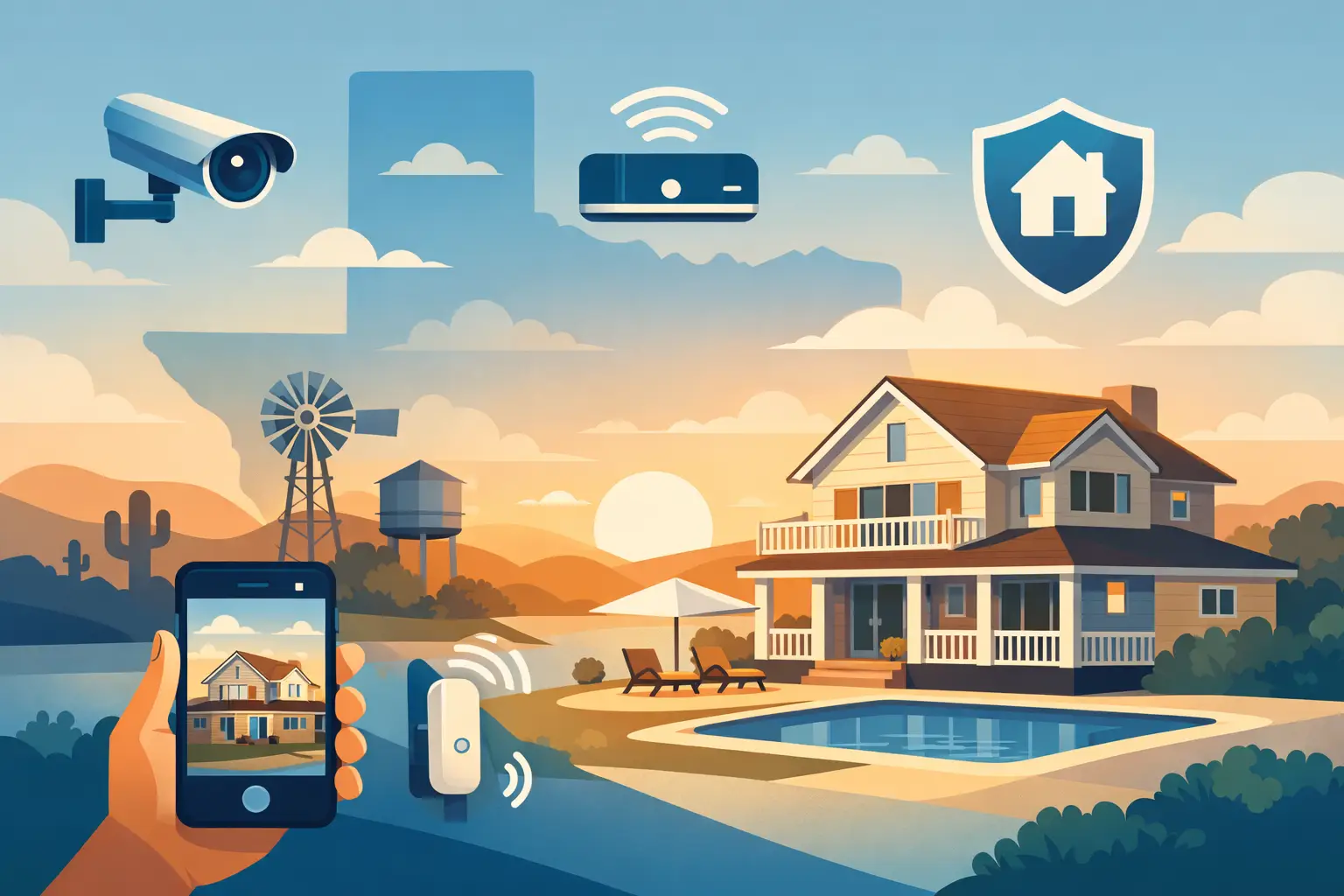
A second home can look perfectly fine on a security camera while a small water leak spreads under a bathroom vanity, an HVAC system runs inefficiently, or a guest-ready detail gets missed before a Friday arrival. That is the central challenge of how to protect second home remotely: visibility alone is not protection. Owners need a local system that detects issues early, controls access, and assigns responsibility for resolving problems.
For Lake Texoma and North Texas owners, remote protection becomes even more important when the property is used as a vacation rental. Guest turnover, changing weather, lake-area conditions, and vendor activity create more moving parts than a home that sits vacant. The goal is not to eliminate every risk. It is to create structured oversight so a minor issue does not become property damage, a poor guest experience, or lost revenue.
The most effective remote-management plan combines technology with people who can physically verify what is happening at the home. Smart devices can send alerts, record activity, and automate access. They cannot investigate a strange odor, confirm whether a cleaner noticed a damaged wall, reset a tripped breaker, or decide whether a roof concern needs immediate attention.
Start by defining who owns each operational responsibility. Someone should be accountable for property checks, guest communication, maintenance coordination, cleaning quality, supply levels, and emergency response. When several vendors have informal access but no single coordinator, issues are more likely to be reported late or passed from one person to another.
A local property manager provides that point of control. Rather than asking an owner to coordinate a cleaner, plumber, HVAC technician, and guest from another state, the manager documents the issue, dispatches the appropriate vendor, follows up on the work, and keeps the owner informed. That structure matters most when the problem occurs on a weekend, during a guest stay, or before a back-to-back reservation.
Routine inspections should be planned around how the home is used. A vacant second home may need scheduled checks every few weeks, plus additional visits after severe weather or a prolonged cold spell. A short-term rental should be inspected during every turnover, with periodic deeper reviews of systems and exterior conditions.
A meaningful inspection goes beyond a quick walk-through. It should verify that doors and windows secure properly, smoke and carbon monoxide detectors are functioning, HVAC equipment is operating normally, plumbing areas show no signs of leaks, and exterior features remain safe. In a rental, the inspection should also identify guest damage, missing inventory, appliance issues, and cleaning concerns before the next arrival.
Documentation creates accountability. Photos, notes, maintenance records, and repair approvals give remote owners a clear record of the property’s condition. They also make it easier to spot repeat problems, such as a recurring drain backup or an exterior door that will not latch reliably.
Traditional keys are difficult to manage from a distance. They can be copied, misplaced, or retained after a vendor visit. Smart locks provide better control because codes can be assigned by person, limited by date and time, and removed immediately when access is no longer needed.
For a vacation rental, guest codes should be unique to each reservation and expire after checkout. Cleaner and maintenance codes should be separate from guest access, allowing activity to be tracked without sharing one master code. Keep a mechanical backup plan in place for lock failures, but limit access to that backup key and document who holds it.
Access control also applies to owner closets, garages, supply rooms, and maintenance areas. These spaces should remain secured and clearly organized. A locked, labeled supply area helps prevent unnecessary purchases, protects owner inventory, and allows the cleaning team to restock efficiently.
Cameras can strengthen oversight at exterior entry points, driveways, and other permitted areas. They should never be placed inside a rental or in any private guest area. Use them to verify arrivals, monitor exterior safety, and support incident documentation, not as a substitute for respectful property management.
Water damage is one of the most expensive risks for a remotely owned home because it often worsens quietly. Place leak sensors under sinks, near water heaters, behind washing machines, and around HVAC drain pans. If the home is vacant for extended periods, consider a monitored shutoff system that can stop water flow after a leak alert.
Smart thermostats allow owners or local managers to monitor indoor temperatures and adjust settings before freezing weather, excessive heat, or humidity becomes a problem. The right setting depends on the season, construction of the home, and whether guests are staying there. For North Texas winter weather, protecting exposed plumbing and maintaining adequate heat may be more urgent than energy savings.
Power and internet outages deserve a response plan, especially if the home relies on smart locks, cameras, leak sensors, or a connected thermostat. A local contact should know how to check the property after a major outage and confirm that critical systems have restarted. Battery backups can support select devices, but they do not replace an on-site assessment when conditions are uncertain.
Severe weather preparation should be scheduled, not improvised. Before storm seasons, check roof condition, gutters, tree limbs, exterior furniture, drainage, and emergency supplies. After a significant storm, a physical exterior review can catch fallen limbs, fence damage, roof concerns, or water intrusion before they create a larger claim.
For short-term rentals, cleaning is not simply a turnover task. It is one of the most frequent opportunities to inspect the home. A disciplined cleaning team notices changes that technology may miss: stained linens, cracked glass, damaged furniture, leaking toilets, pest activity, missing items, or signs that an appliance is failing.
The quality standard matters. Generic cleaning may leave a home looking acceptable while overlooking inventory, maintenance observations, and hospitality details that affect guest reviews. A hospitality-grade turnover process should include condition reporting, restocking verification, linen control, and a clear escalation path for damage or maintenance needs.
This process also protects revenue. If a cleaner reports an issue immediately, the manager can coordinate a repair before the next check-in. If the issue is discovered by the next guest, the owner may face a refund request, a lower review, or an unplanned vacancy. Fast reporting is often the difference between a routine maintenance expense and a revenue problem.
A reliable vendor network is valuable, but the process around the vendor is what protects the owner. Every service call should have a defined scope, approval process, communication standard, and completion check. Owners should know what happened, why it happened, what it cost, and whether additional work is recommended.
Avoid relying solely on the first available contractor when possible. Established local vendors understand regional conditions, can respond more consistently, and have a reputation to protect. Still, speed matters during active leaks, HVAC failures, or safety issues. The right approach balances cost control with the need to prevent further damage or guest disruption.
For larger repairs, request photos and a written explanation before approving work unless the situation is time-sensitive. For emergency work, establish spending authority in advance. That prevents delays when a local manager needs to stop water damage, secure a broken entry point, or restore essential systems for guests.
A second home used as a rental requires two connected forms of protection: physical asset protection and operating performance. Leaving calendar gaps, responding slowly to inquiries, or failing to maintain the listing can reduce income even when the house itself is secure. Likewise, maximizing occupancy without disciplined turnover and maintenance processes can accelerate wear and create guest issues.
The strongest remote-management approach protects both. It uses pricing and listing oversight to support revenue, while local inspections, cleaning standards, supply monitoring, and vendor coordination protect the property behind the reservation. Owners receive visibility without needing to manage the daily details themselves.
Texoma Host Solutions coordinates these moving parts through a locally accountable process designed for absentee owners in Lake Texoma and North Texas. The value is not simply having someone answer a message or schedule a cleaner. It is having a local operator responsible for keeping the home secure, maintained, guest-ready, and positioned to perform.
Remote ownership works best when it is not based on hope, occasional check-ins, or a collection of disconnected vendors. Put clear controls in place, give a qualified local team defined responsibility, and let every inspection and turnover serve the larger purpose of protecting the home you worked hard to own.


 (903) 933-6100
 info@texomahostsolutions.com