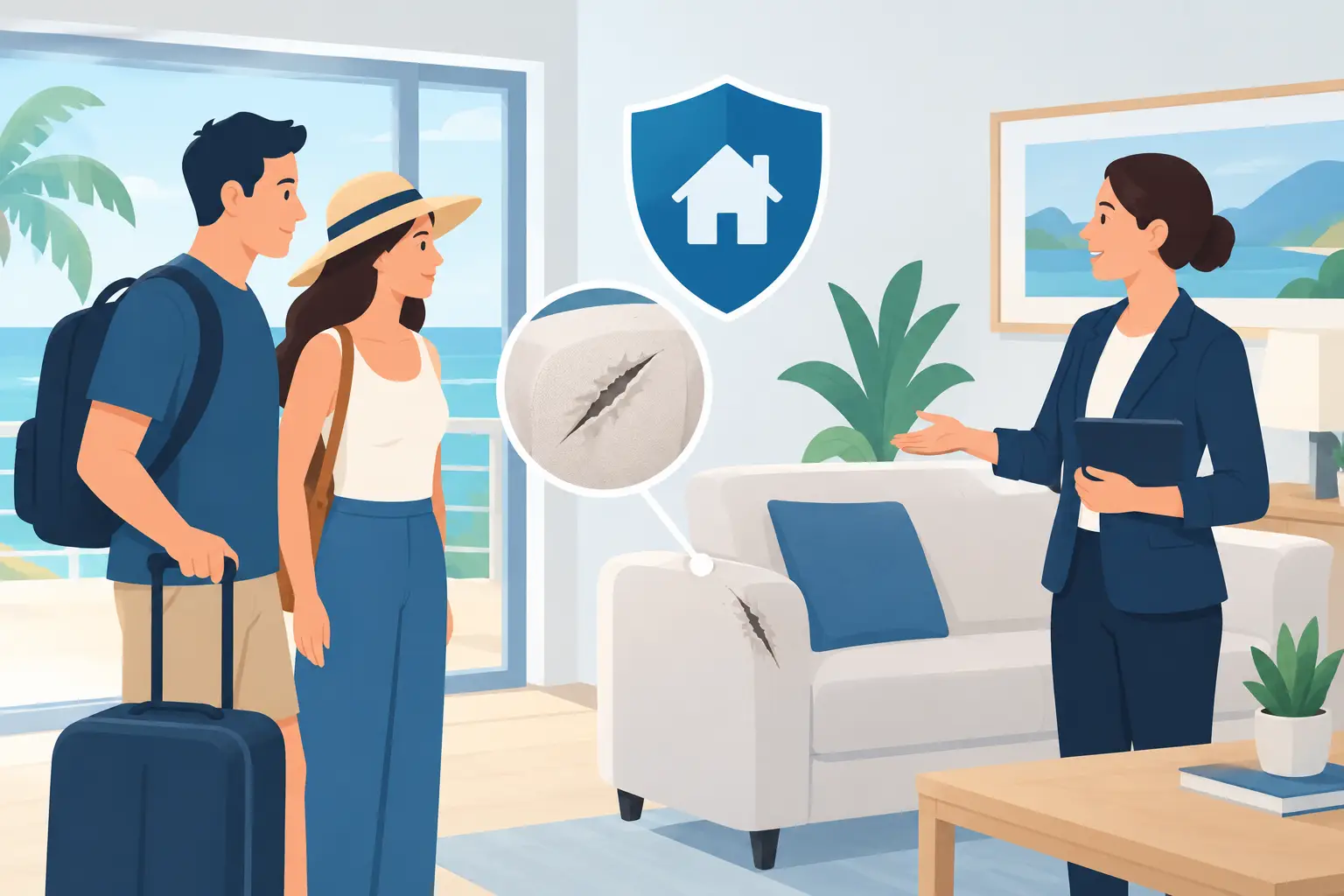
A red wine spill on a sofa is one thing. A broken dock gate, damaged HVAC thermostat, or missing smart lock is another. When owners ask who pays for guest damages, the practical answer is: the guest may be financially responsible, but the owner or manager must usually act first to document the loss, stabilize the property, and pursue reimbursement through the correct channel.
For remote vacation-rental owners around Lake Texoma and North Texas, that distinction matters. Waiting for a platform decision does not make a home safe, clean, or ready for the next reservation. A disciplined damage process protects the asset, preserves revenue, and gives every claim the evidence it needs.
In most short-term rental situations, the guest who caused the damage is responsible for the cost. That responsibility may be addressed through a platform’s damage-protection process, a security deposit or card hold, a rental agreement, travel insurance, or direct payment from the guest.
But responsibility and recovery are not the same thing. The owner may need to pay for an urgent repair before reimbursement is resolved, particularly when the damage affects safety, water, electricity, access, sanitation, or an upcoming booking. A manager’s role is to control that exposure: document the condition, coordinate the repair, protect the calendar, and submit a clear claim promptly.
The final outcome depends on several variables: the booking platform, the protection program in place at the time of booking, the evidence available, the guest’s acceptance of responsibility, and the specific terms of the rental agreement. Platform policies can change, so owners should not treat any program as guaranteed insurance.
A sound claims process starts with a clear distinction between ordinary use and damage. Guests are not generally charged for items reaching the end of their useful life, minor scuffs consistent with occupancy, or a maintenance failure that was already developing.
Guest-caused damage is different. Examples include a shattered window, burns in upholstery, excessive pet-related cleaning beyond standard turnover, unauthorized-party damage, missing inventory, broken furniture caused by misuse, or plumbing damage from prohibited items.
This is where condition records matter. If a dining chair breaks during a stay but was already loose, old, or visibly deteriorated, charging a guest may not be reasonable or recoverable. If post-checkout photos show a previously intact chair split after an unauthorized gathering, the claim is stronger. Fair decisions protect the owner’s credibility and reduce disputes.
Damage claims become harder to support with every handoff, repair, and passing day. The best time to collect evidence is during the turnover inspection, before cleaners remove debris or vendors repair the item.
A structured local team should photograph and, when useful, video the affected area from both wide and close angles. Images should show the damage, the surrounding condition, and any relevant details such as stains, debris, missing items, or visible misuse. Time-stamped inspection records and pre-arrival photos establish the before-and-after condition.
The team should then secure the home. That may mean shutting off water, changing a lock code, removing a safety hazard, arranging emergency board-up service, or taking an unusable bedroom out of inventory. Guest readiness comes first. A delayed repair can turn one damaged item into a cancellation, a refund, or a poor review from the next guest.
For material losses, obtain an itemized vendor estimate or invoice. Generic statements such as “couch damaged, $2,000” are less persuasive than a record showing the item, condition, repairability, comparable replacement cost, labor, taxes, and supporting photos. If replacement is required, the claim should account for the age and condition of the original item where applicable.
Airbnb, VRBO, and direct-booking systems handle claims differently. Some offer host damage-protection programs, while others may allow security deposits, card authorizations, or payment-request processes. The booking channel used for that reservation controls the initial claim path.
A platform claim usually requires timely submission, detailed evidence, communication with the guest, and proof of costs. The platform may review whether the damage was accidental, intentional, pre-existing, excluded, or sufficiently documented. It may also consider whether the host followed reporting deadlines. Missing a deadline can eliminate an otherwise valid recovery opportunity.
A security deposit is not an automatic charge. Depending on the platform and booking setup, it may require guest approval, documented authorization, or a dispute process. Owners should avoid assuming that a listed deposit will immediately cover all losses.
Direct bookings create more control, but they also require stronger operating discipline. The rental agreement should clearly define the guest’s responsibility for damage, the process for reporting incidents, prohibited conduct, inspection rights where legally appropriate, and the method used to collect authorized charges. Local and state law can affect what is enforceable and how deposits must be handled, so owners should have their agreement and procedures reviewed by qualified legal counsel.
Homeowners insurance, landlord coverage, short-term rental endorsements, platform protection, and guest travel insurance do not serve the same purpose. A standard homeowners policy may restrict or exclude business activity and short-term rental use. Platform programs often include limitations, exclusions, evidence standards, and claim procedures that differ from a conventional insurance policy.
Owners should speak with an insurance professional who understands vacation rentals in Texas and confirm coverage for the building, furnishings, loss of income, liability, and specific risks associated with the property. Lake homes may also need attention to docks, boats, watercraft, detached structures, storm exposure, and guest access to waterfront features.
Insurance is especially relevant for major losses, but it should not replace everyday prevention. A $300 damaged rug or a missing kitchen appliance can still create operational friction even if it does not justify an insurance claim. Clear records and a reliable chargeback process remain necessary.
The most effective damage strategy begins before a guest arrives. Accurate listing rules, occupancy limits, pet policies, parking restrictions, quiet hours, and prohibited-event language create a usable standard when a problem occurs. Guests cannot reasonably be held to a rule that was never communicated.
Property setup matters as well. Durable furnishings, washable covers, protected mattresses, inventory controls, exterior lighting, smart locks, noise-monitoring tools where permitted, and routine maintenance reduce the opportunities for loss. These measures should support hospitality, not make a home feel hostile. The objective is a well-run property that is easy for respectful guests to enjoy and difficult to misuse.
A pre-arrival inspection and a consistent post-stay checklist create accountability across every turnover. Cleaners often see the first signs of damage, but they need a defined escalation process rather than being asked to make judgment calls alone. The right workflow separates standard cleaning from excessive cleaning, maintenance needs, and potential guest claims.
Remote owners are at a disadvantage when damage is discovered late, interpreted inconsistently, or handed off among several vendors. The person submitting the claim may never have seen the home, while the repair vendor may arrive after evidence has been removed. That gap costs time and can weaken recovery.
Local oversight creates a more controlled chain of custody. A hands-on manager can inspect the home, coordinate qualified vendors, obtain accurate estimates, protect the next reservation, and keep the owner informed of the decision points. Texoma Host Solutions applies this type of structured coordination so owners have visibility without needing to manage a claim from another city or state.
Not every damaged item should become a contentious guest charge. Small, ambiguous issues may be more efficiently handled as an operating cost, especially when documentation is limited or the item was already near replacement. Larger, clearly documented losses deserve a prompt and well-supported claim. That judgment protects both the property’s financial performance and its guest experience.
The best time to decide how guest damage will be handled is before the first problem occurs. Set the rules, confirm the insurance, maintain condition records, and put a local response process in place. When something does happen, the property is protected by procedure rather than improvisation.




 (903) 933-6100
 info@texomahostsolutions.com
